The water
Lake Levels and the Fall 2026 Waterfront Season: What Buyers Should Know
Noah Goedker · September 11, 2026
Several seasons of below-normal rain have left many north-central Minnesota lakes lower than usual heading into fall 2026. For lake-home buyers, that changes what to look for on a shoreline walk and what to ask about before an offer. Here is what the DNR and area reporting say right now, and how to check a specific lake like Mitchell.
The region's storage drought
North-central Minnesota has received roughly 12 to 16 inches below normal precipitation over the past four years, per the Minnesota DNR and area news. By September 2026, isolated lakes in the region were running about 2 to 4 feet lower than usual, and the Mississippi River at Brainerd sat in the DNR's "Low" category.
Gull Lake offers a useful example nearby: per the U.S. Army Corps of Engineers, Gull sat at 1,193.66 feet elevation in mid-August, about 4 inches below its 1,194-foot summer target (the summer band runs 1,193.85 to 1,194.15 feet), with the dam releasing its minimum 20 cubic feet per second since July 11 and the level still slowly receding, mostly from evaporation. Not every lake behaves the same way, which is exactly why buyers should check the specific lake they are buying.
The latest drought monitor, tracking conditions through September 8, 2026, still shows roughly 46 percent of Minnesota in severe drought or worse, down from about 52 percent the week before after late-summer rain. Around 94 percent of the state remains abnormally dry or drier, and about 69 percent sits in some level of drought. The DNR's state climatologist has framed it as a multi-year "storage drought": water stored in lakes, rivers, and groundwater has been running a foot-plus below normal, and it would take months of above-normal precipitation to restore typical levels. In practical terms, public accesses in some parts of the region no longer reach the water, which is worth knowing before you launch.
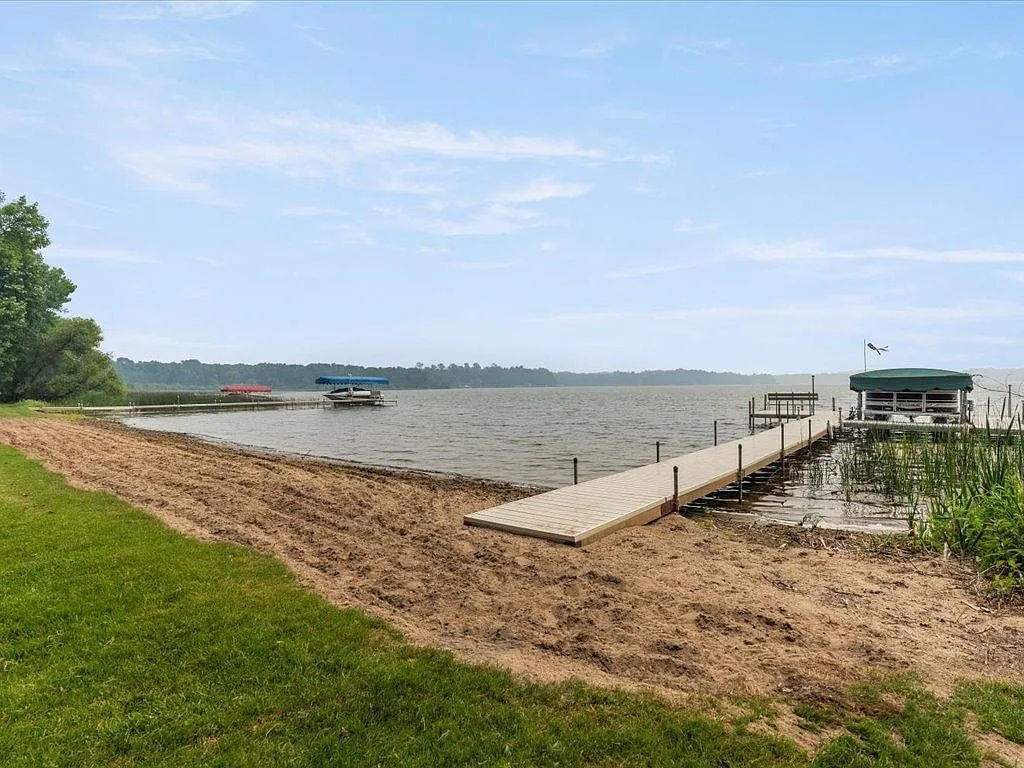
The follow-up reading through September 18 showed only slight improvement, and the conditions stayed widespread: in Benton County, 98 percent of the county sat in severe drought or worse, with Sherburne County at 94 percent. The DNR has also cautioned boaters about shallow water at public landings across the region this season, per MPR. For a shoreline owner the low-water picture cuts both ways: it is worth asking about dock and lift depth at a lake that is running low, and it makes level, sandy frontage, the kind 16138 Zigmund Dr has, more valuable, not less.
A late-September check-in
The freshest readings, through this week, say the storage drought is still with us. The DNR's drought monitoring, released September 17, puts about 70 percent of the state in moderate drought or worse, with roughly 32 percent severe or extreme, and the U.S. Drought Monitor map valid September 22 held steady across central Minnesota week over week. The gauge at Mille Lacs, a useful regional yardstick for the north-central basins, read 10.42 feet on September 11, about 0.3 feet below the same date a year earlier.
On the winter side, NOAA's Climate Prediction Center advisory of September 10 keeps El Nino above 90 percent odds of a very strong event through fall and winter, with the weekly Nino 3.4 anomaly at about +2.9 degrees C in early September, near +3.0 by mid-month, the signature of a "super" El Nino expected to persist into spring 2027. NOAA's official December-February outlook, released August 20 and updated September 17, favors milder-than-normal temperatures across Minnesota with equal chances on precipitation. The working expectation for lake-country buyers remains a milder-than-normal winter and a later-than-average freeze-up, with ice thickness always verified locally before anyone walks on it.
What lower water means on a shoreline walk
Lower levels can expose shallows, shorten the usable beach, and change how a dock and lift sit at the waterline. When you tour, look at the water's edge, not just the view: where the water meets the sand, how far a dock extends, and whether there is room to beach a boat.
The DNR advises buyers to get a surveyed elevation of the property relative to the lake and to check current lake-level data lake by lake. For 16138 Zigmund Dr, Mitchell Lake's own DNR record is the authoritative place to verify conditions for that specific basin.
Ice-in timing for the coming winter
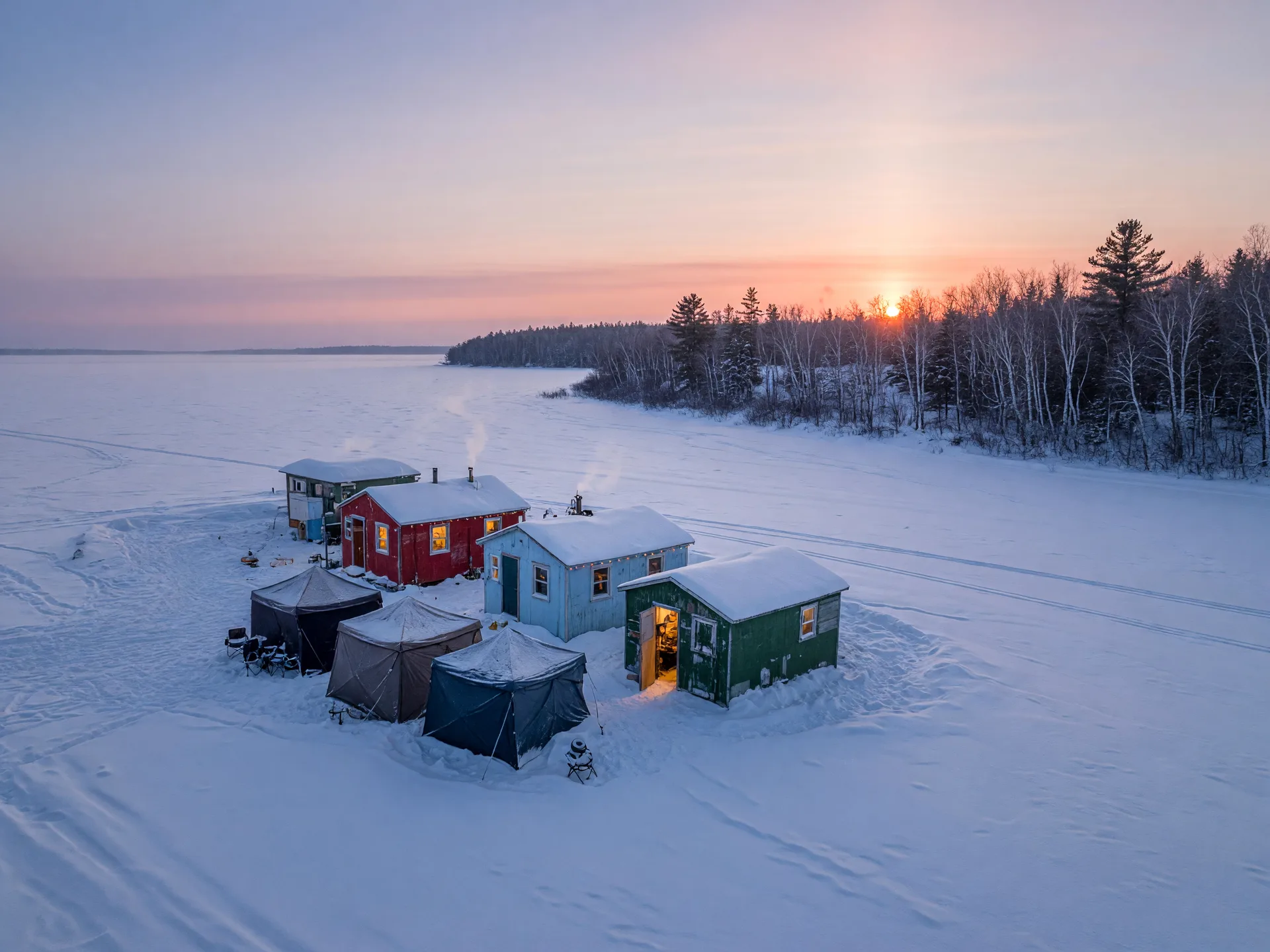
The DNR does not publish current-season ice-in dates ahead of time, so exact fall 2026 dates are not yet known. Long-term medians offer a guide: Gull Lake's median ice-in is around December 1, and smaller area lakes typically freeze in mid-to-late November. Statewide, ice-in has trended roughly nine days later since 1967, so late November to early December is the working expectation.
Seasonal outlooks for winter 2026-27 are projections, not guarantees, and neither the Farmers' Almanac nor NOAA issues specific ice-in dates ahead of freeze-over. What has changed since early September is the weather driver: the El Nino has strengthened into what NOAA now calls a very strong event, with its September 10 advisory putting odds above 90 percent that it persists through fall and winter. NOAA's official winter outlook, released August 20 and updated September 17, favors milder-than-normal temperatures across the northern tier, including Minnesota, with equal chances on precipitation. El Nino winters in Minnesota have historically run about 2.4 degrees warmer and about 24 percent less snowy, per the state DNR's Climatology Office, which leans the honest expectation toward a milder, later-freeze winter. The Farmers' Almanac, by contrast, calls for near-average temperatures with sudden cold snaps, blustery winds, and brief snow squalls, a call Minnesota meteorologists have publicly doubted given the record-strength El Nino. The two still point in different directions, so the working answer remains: watch fall temperatures before trusting any single forecast.
One longer trend is worth knowing, too: Minnesota's lake ice season has already shortened by roughly 10 to 14 days over the past 50 years per the MPCA and DNR, and in the record super El Nino winter of 2023-24 some state lakes saw late-January freeze-ups. That pattern points the same direction as this winter's outlook: a later, slower freeze is the more likely path, which means more open-water weeks this fall, and ice that needs careful verification before anyone walks on it.
For a lake-home buyer, that still means a full ice-fishing season is on the calendar for winter 2026-27, but always verify ice thickness with local authorities before walking or driving on any lake.
A colorful fall, despite the dry year
The Minnesota DNR launched its fall color forecast around September 9, 2026, and expects peak color from late September into mid-October, progressing from the northwest and north-central parts of the state toward the southeast. The forecast notes that drought near St. Cloud and recent northern fires may mute some regions, but the season should still be colorful. For the Mitchell Lake area, that puts the peak color window right around the property's quietest, most photogenic weeks, and the lakeside screened porch is built for them.
Water levels move every season. The best lake homes are the ones that still live well at the waterline, high year or low.
How 16138 Zigmund Dr fits
Level elevation is part of what makes this shoreline resilient across water conditions. With no stairs to the water, a level lawn, a compliant septic, and a 30x60 shop for boats and winter gear, the property works whether the water sits high or runs low. The level walk to the ice in winter stays short and safe regardless of the waterline.
Want to see how the beach and dock sit this season? Noah will meet you at the property, walk the shoreline, and point you to the current DNR data for Mitchell Lake so you can verify conditions yourself.
For current regional context, start with the DNR's September HydroClim summary, NOAA's September 10 El Nino status, the September 2026 drought update, the DNR's lake-level notice, KAXE's storage-drought coverage, the DNR Climatology Office's El Nino explainer, MPR's El Nino coverage, the DNR's 2026 fall color forecast, the CPC's December-February seasonal outlook, and the DNR's ice-in data.